

HOW WE WORK
HIGH PERFORMANCE ENVELOPE
Triple pane windows: exceptionally tight and insulating; even comfortable to sit next to when it is -15F outside.
Airtight envelopes: We typically aim for 1 ACH at 50 pascals though we’ve gone lower upon request.
Ventilation Systems: either a heat recovery or energy recovery system (HRV/ERV) that is balanced and designed to fit the needs of a home.
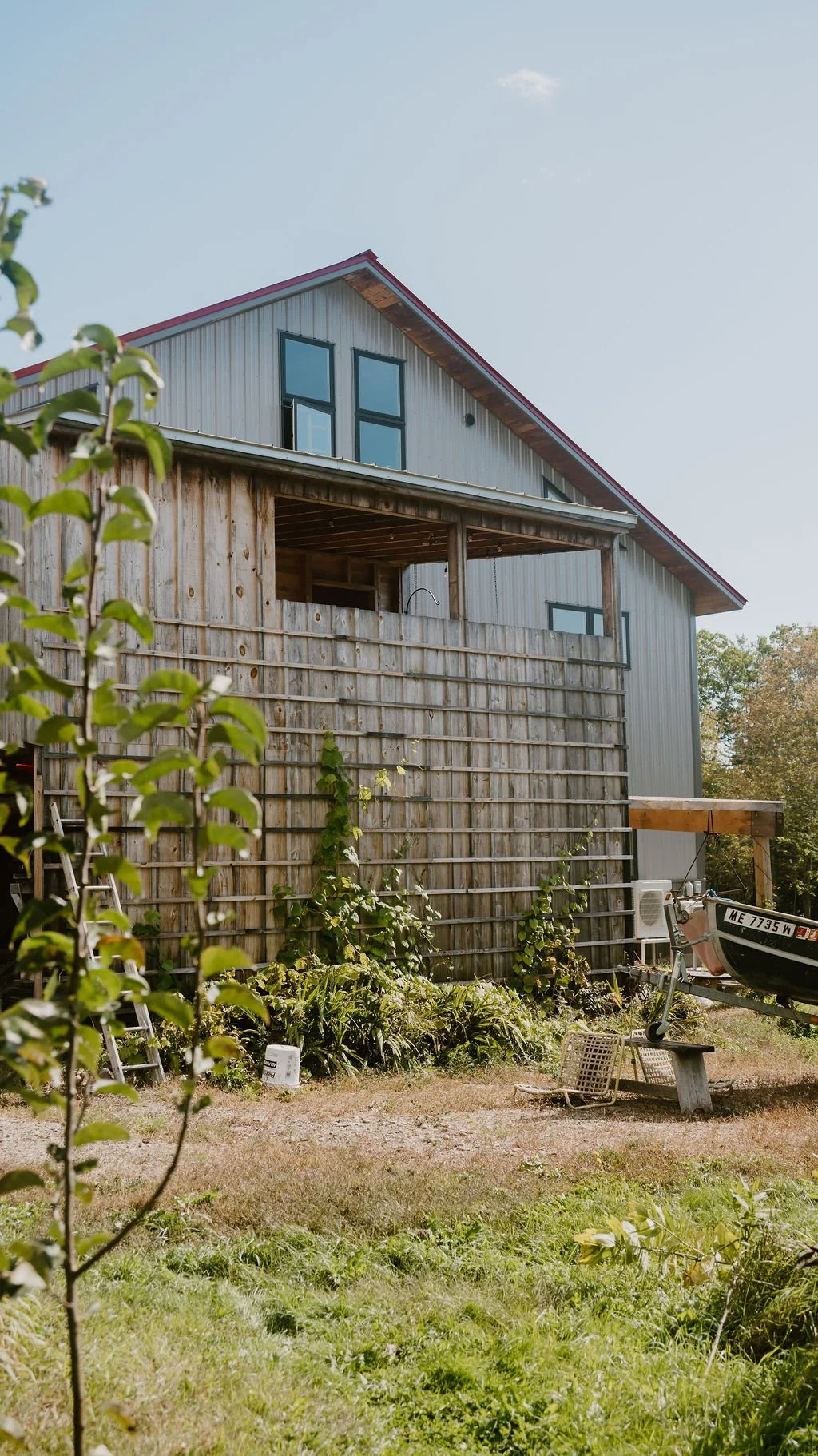
Proper Water Management: Generous eaves and other critical water management elements including rain screens, kickout flashings, and a sensible height above grade.
Resilient Resources: Materials that can be recycled at the end of their life, require minimum upkeep, have low embodied energy, or are made from recycled materials.
Local Sourcing: We enjoy working with local mills and there are many benefits to using locally sourced materials. It is shown to be the “greenest” option in terms of greenhouse gas emissions. It also leads to design choices that make a home feel more part of the landscape and more connected to the tradition of craftsmanship in Maine. Some examples of local materials include rough-sawn spruce or hemlock framing, native white cedar decking and trim, pine timber frames and trim, and hardwood flooring and cabinets, furniture etc. We also have access to locally quarried granite for countertops, tile work, or landscaping.

A NOTE ON UNIVERSAL DESIGN
We advise our clients to build homes with their future needs in mind. This means designing a home that can accommodate single-story living. Some additional features we encourage clients to consider are wider doors for wheelchairs, minimal or no thresholds, and low curb or curbless showers. We always include space for future grab bars in bathrooms and showers etc.
We build homes for the generations to come. Now more than ever, high-quality information is widely available from a range of sources about best building practices for long lasting, highly efficient, and resilient homes. Learn more about how we make use of contemporary building science here.

RECOMMENDED RESOURCES
Fine Homebuilding
Cold Climate Housing Research Center
Pretty Good House by Michael Maines, Emily Mottram, Christopoher Briley and Dan Kolbert
Get Your House Right by Marianne Cusato and Ben Pentreath
A Pattern Language by Alexander, Ishikawa, Silverstein, Jacobsen, King and Angel
Field Guide To American Architecture by Virginia and Lee McAlister
The New Net Zero by William Maclay